

AquaPolis shared the latest research progress and emerging innovations from its Asian Seabass and Marine Tilapia Research Programmes at the Local Farming Science & Innovation Hour, held during the Asia-Pacific Agri-Food Summit on 28 October 2026, as part of Singapore International AgriFood Week (SIAW) 2026.
Organised by the Singapore Agro-Food Enterprises Federation (SAFEF), the closed-door session brought together local farmers and researchers to exchange insights on science-driven solutions addressing key challenges in Singapore’s aquaculture industry.
Representing the respective research teams, Associate Professor Christoph Winkler presented updates on the AquaPolis Asian Seabass Research Programme, while Associate Professor Liou Yih-Cherng shared progress from the Marine Tilapia Research Programme.
Advancing Asian Seabass Production Through Integrated Research
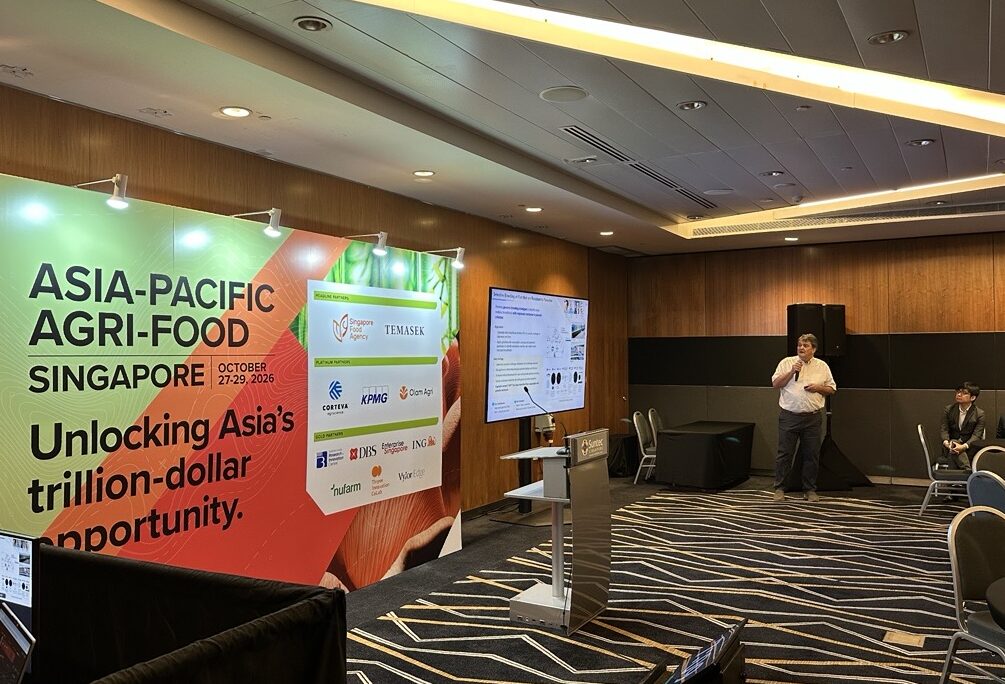
Focused on improving Asian Seabass production efficiency, product quality and sustainability. A/Prof Winkler highlighted ongoing research and promising developments in several key areas:
- Fish health and disease management: Developing improved disease surveillance and monitoring via environmental DNA (eDNA), and management approaches such as selective breeding to support healthier fish and reduce production losses.
- Hatchery and juvenile performance: Advancing broodstock management and larval nutrition strategies to improve seed quality, survival and growth.
- Sustainable aquaculture production: Exploring promising alternative feed ingredients, including cassava and upcycled bread waste, and nutritional strategies to enhance resource efficiency, reduce production costs and improve fish quality.
Strengthening Marine Tilapia Farming Through Genetics and Nutrition
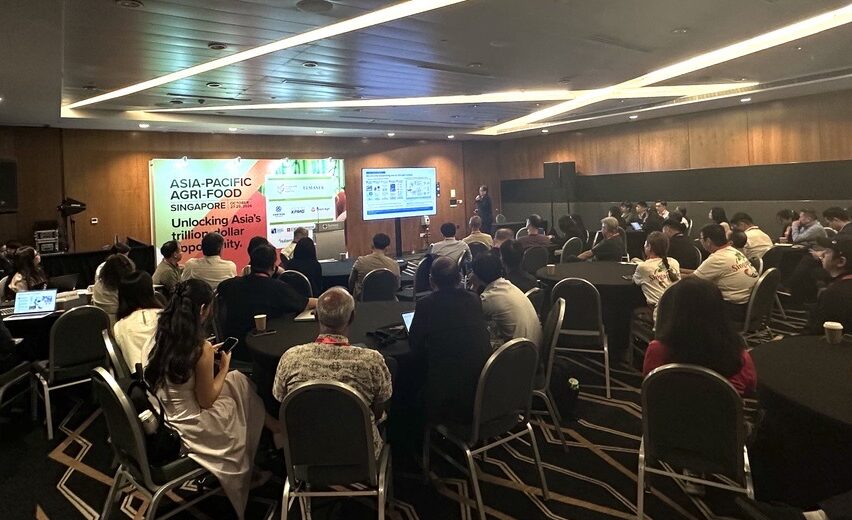
For Marine Tilapia developments, A/Prof Liou shared progress on research aimed at improving growth, survival, feed performance and traceability. Key areas of development included:
- Selective breeding and genetic improvement: Developing improved marine tilapia strains with enhanced growth performance and robustness to support more consistent farm productivity.
- Feed and nutrition optimisation: Evaluating experimental transition-feeding strategies on growth performance in sea-cage trials, and feed assessment technologies to optimise digestibility and palatability.
- Genetic traceability: Advancing DNA-based tools to support strain identification, selective breeding and product traceability.
Translating Research into Practical Farm Solutions
The session highlighted the potential of AquaPolis’ industry-driven research to address practical farming challenges. Through continued collaboration with local farmers and industry partners, AquaPolis aims to translate research outcomes into solutions that enhance the productivity, resilience and sustainability of Singapore’s aquaculture sector.