

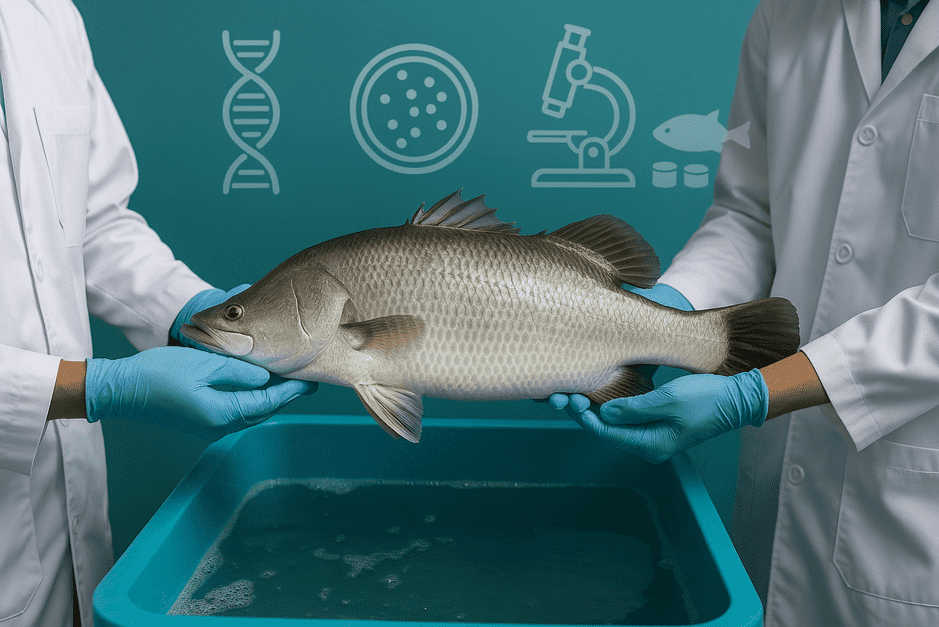
We are delighted to announce the award of the AquaPolis Programme Tranche 1 – Optimising Asian seabass research and production in Singapore through an integrated approach. This award is part of the Singapore Food Agency’s broader initiative to boost aquaculture research in Singapore.
This milestone underscores Singapore’s commitment to future-ready, high-performance aquaculture, and recognises AquaPolis’ role as a collaborative platform bringing together industry, academia, and government to build a resilient, innovation-driven seafood ecosystem.
What the Tranche 1 programme will focus on
- Integrate R&D across broodstock, hatchery, nursery, grow-out and processing.
- Translate research into scalable on-farm solutions through pilots and demonstrations.
- Strengthen data, diagnostics and digital tools to improve health and productivity.
- Build local capabilities to adopt best-in-class practices and technologies.
Why it matters
- Asian seabass is a key species for Singapore’s aquaculture sector. Improving its performance and reliability strengthens our local production, supports the target of meeting 30% of our local consumption of protein, and enhances competitiveness in regional markets.
- An integrated approach reduces fragmentation, speeds up innovation, and ensures that gains in genetics, feed, health, and husbandry add up to measurable outcomes on farms.
- A collaborative programme enables faster problem-solving, shared infrastructure, and pathways for commercialisation.
Get involved
We welcome collaborators across the value chain who share our vision for a more productive, sustainable, and resilient aquaculture sector. If you are interested in partnering on research, pilots, technology validation, training, or investment, reach out via our contact page.
AquaPolis is committed to advancing aquaculture through confident, collaborative innovation. The Tranche 1 programme marks the start of a new phase for Asian seabass in Singapore—where science, technology, and industry work as one to deliver better fish, stronger farms, and a more secure food future.
